.webp)



Are you still gambling your quarterly targets on static spreadsheets and subjective intuition that rarely reflect the true state of your pipeline? AI sales forecasting shifts your approach from reactive guesswork to proactive precision by analyzing real-time data and conversation insights for objective revenue projections. We will detail how this technology automates administrative work to improve accuracy, so you can allocate resources with confidence, catch churn risk early, and help your team hit quota with less operational friction. A forecast is only as good as the CRM features your team actually uses and the way you leverage your CRM data day to day. AI sales forecasting in 2026 ends spreadsheet guesswork with real-time insights for accurate forecasts, clear pipelines, and predictable revenue.
The bottom line: relying on spreadsheets and intuition creates significant blind spots in revenue prediction. AI-powered forecasting changes this by analyzing real-time conversation data, which improves accuracy and reduces manual error. The result is more predictable revenue and far less time lost to tedious tasks.
Why traditional sales forecasting is a losing game
The illusion of control with spreadsheets
Relying on static Excel files instead of modern AI sales forecasting is a gamble. It is an outdated practice, yet around two-thirds of companies still rely on spreadsheets for this critical task. The manual process drains productivity and buries your team in busywork. A single typo or broken formula can make the data obsolete the moment you share it, which makes manual entry a constant source of error. You cannot pilot a sales team on that kind of ground; it is less a strategy than an exercise in guesswork.
When intuition and bias sink your revenue
Then there is the "gut feeling" factor, where managers and reps mix optimism with strategic sandbagging. It is rarely objective and is subject to bias at every level: a rep might inflate a deal to look good, or hide one to safely hit quota. Forrester analysis finds these manual forecasting methods unreliable for long-term planning. Relying on instinct alone is like flying blind, and strategic decisions need hard data rather than hopeful assumptions.
The high cost of inaccurate predictions
Bad data hits where it hurts: missed revenue targets. For sales leaders, that means losing credibility with the board and scrambling to close the gap at the last minute. The damage spreads beyond the sales floor, too. Poor planning leads to inventory mismanagement, where stockouts cost retailers hundreds of billions annually, and you can waste budget on hiring or marketing spend based on shaky projections. Inaccurate predictions are a company-wide liability, not just a sales headache.
How AI-powered forecasting provides clarity
Stop looking only in the rearview mirror. Traditional methods focus on what already happened, but AI sales forecasting scans many data points to spot patterns you might not see otherwise. It draws on CRM logs, email threads, call sentiment, and even external market shifts, shifting you from guessing based on the past to forward-looking revenue prediction. Instead of a dump of raw numbers, you get clear insights that drive better decisions.
Automating the grunt work for higher accuracy
Nobody became a sales leader to clean spreadsheets. AI automates the tasks that drain time: scrubbing data, identifying trends, and generating reports. This is not just about speed, it is about reducing the errors that creep into manual work. Revenue intelligence platforms can meaningfully reduce forecasting errors and improve accuracy compared with manual methods, so your reps get back to selling and you get back to strategy.
Adapting in real-time to market shifts
Static Excel models are out of date the moment you save them. AI models adjust continuously as the landscape changes. If a competitor launches a new feature or client sentiment dips, the system can catch these weak signals and recalibrate the forecast without manual work, so you are not waiting for the quarterly post-mortem. The point is faster, smarter decisions when the market will not wait for your quarterly review.
The real-world impact of intelligent forecasting
It sounds good in theory, but what results can you actually expect from adopting AI for your forecasts?
Achieve predictable revenue and hit quota
Gut feelings do not pay the bills; you need precision. With AI sales forecasting, you move from guessing to working from objective probability, and some platforms report accuracy well above what manual methods achieve. Reliable data means you set realistic targets and allocate resources efficiently, and that clarity can translate into a meaningful lift in close rates. You stop reacting to the market and start planning ahead, turning forecasting into a real growth lever.
Boost sales team productivity and morale
Most leaders underestimate how much reps dislike data entry. AI strips away that manual work and gives the time back to selling, which can shorten sales cycles because the team stays focused. More focus means more conversations and, over time, more closed deals. When you free people from administrative drag, they are not just more productive, they are happier.
Gain real visibility into your pipeline
"I think we'll close it" is not a strategy; you need the real picture. AI gives you an objective view of the field, stripping away the optimism bias.
| Metric | Traditional forecasting | AI-powered forecasting |
|---|---|---|
| Accuracy | Lower, set once per cycle | Higher, continuously recalibrated |
| Data sources | Historical CRM data, gut feeling | CRM, calls, emails, market trends |
| Update frequency | Quarterly or monthly | Real-time |
| Manual effort | High | Low, automated |
| Bias | High risk | Objective, data-driven |
In other words, you trade a blurry, dated photo for a live view of your pipeline. That clarity lets managers coach with precision and anticipate problems before they affect the quarter.
Going beyond CRM data: the power of conversation intelligence
The real breakthrough is not just in analyzing numbers. It is in analyzing words.
Your customer conversations are a data goldmine
Think about how many hours your team spends talking. Every call, video meeting, and email exchange is packed with intel that shapes your revenue, yet this voice of the customer is largely unexploited. Vital details get lost in messy notes or forgotten entirely, leaving your CRM incomplete and your forecasts built on partial data. So ask yourself: what if you could capture and analyze all of those conversations automatically?
How AI extracts actionable insights from every call
Here is how it works. The AI transcribes the discussion, then scans the content to extract key information that usually slips through the cracks. Instead of vague notes, you get structured data points:
- Budget confirmed by the prospect
- Key decision-makers identified
- Main pain points and needs
- Competitors mentioned
- Next steps and timeline agreed upon
It goes deeper too, tracking sentiment, talk ratios, and recurring objections. That is the difference between knowing a meeting happened and knowing exactly what was said and how it affects the deal. To do this well, you need the right tools for AI meeting notes.
Turning talk into trustworthy forecasts
This is where AI sales forecasting proves its worth. These conversational insights feed your CRM directly to correct and enrich your pipeline data. Take a concrete example: your CRM shows an 80% closing probability, but the AI detects that the client mentioned a budget restriction, so the forecast is adjusted to reflect that risk. That is how you get reliable, complete, structured data for predictions that match reality.
How to choose the right AI forecasting tool
The market is noisy right now, so here are the criteria that help you avoid a costly mistake.
Look for a layer that enriches your CRM, not another platform
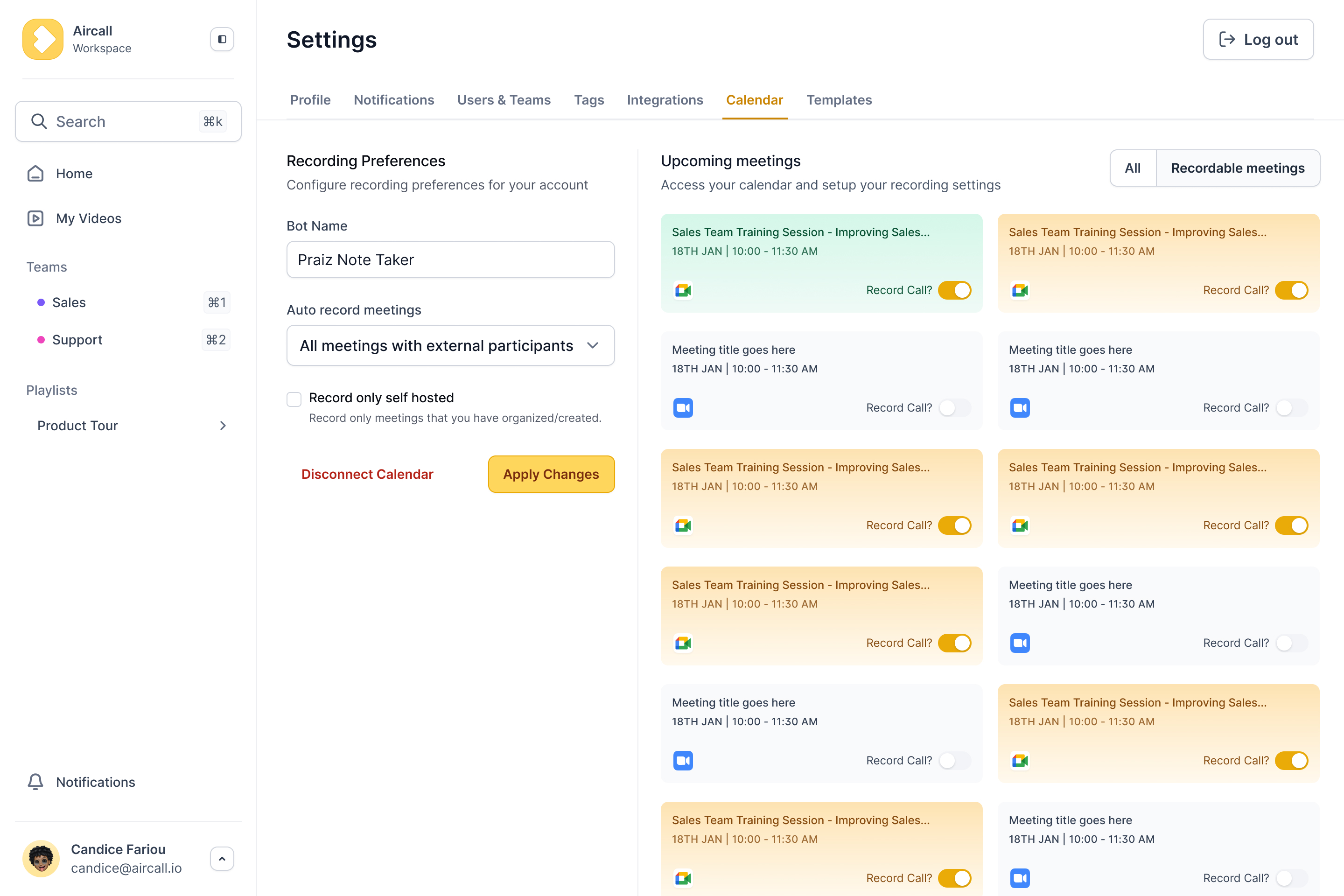
Your reps are already juggling plenty of apps, and adding another standalone login tends to kill adoption. You do not need more software clutter, you need streamlined efficiency. Think of Praiz as a conversation intelligence layer that works alongside your CRM rather than adding another silo. Its AI agents feed your system with reliable, automatic data to make your CRM the single source of truth. The goal is to enrich the stack you already use, not compete with it for attention.
Integration is everything: demand broad compatibility
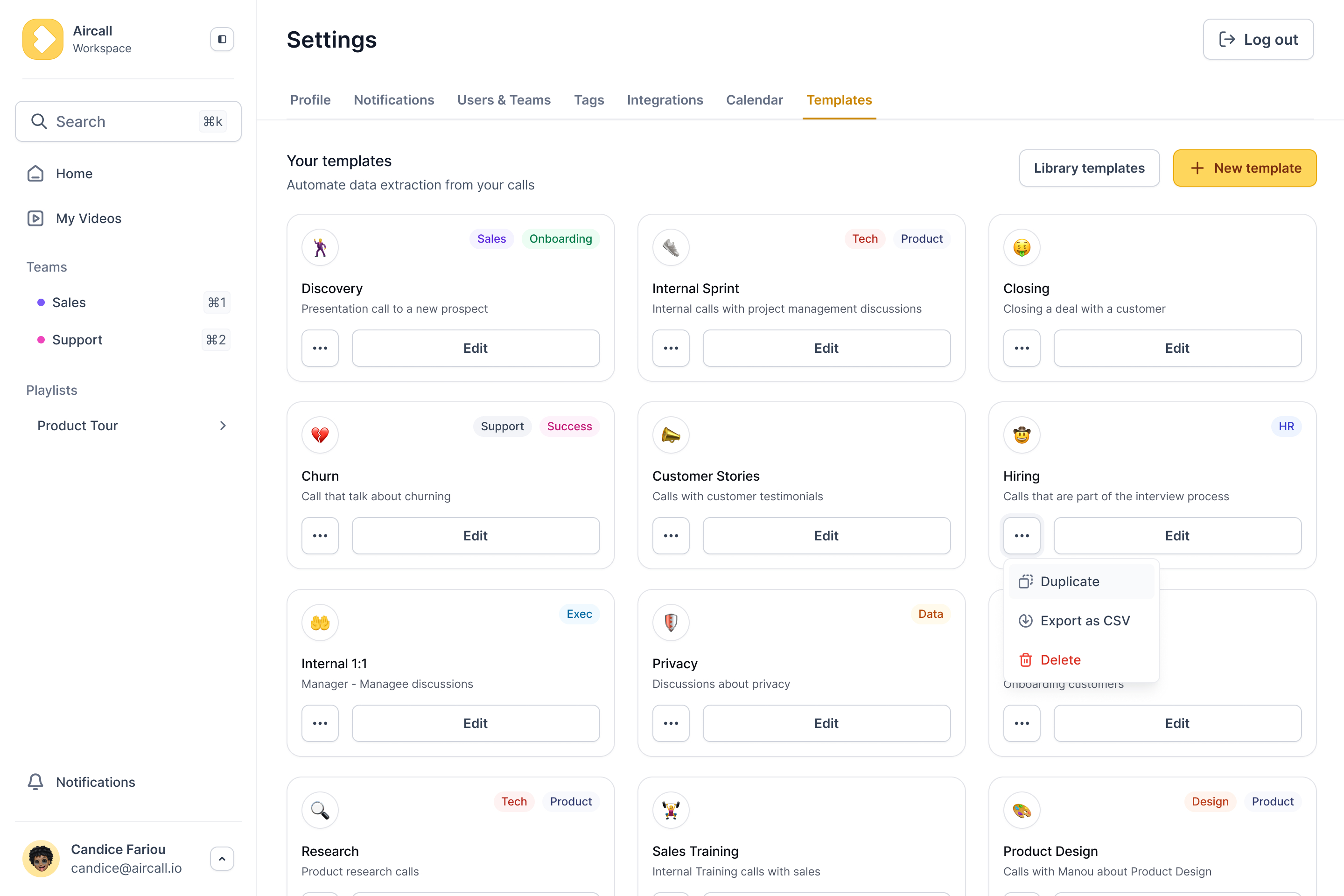
If an AI tool does not connect cleanly to your existing stack, it becomes dead weight. Frictionless data flow is how you scale, so you want a solution that works with your CRMs and ERPs, plus every conversation source, whether VoIP or video calls. A robust, well-documented API is not a luxury, it is a requirement for enterprise environments. Tools like Praiz integrate with all major CRMs, which makes deployment faster and less painful.
Customization: one size does not fit all
Your business is not generic. Your sales process, internal jargon, and specific KPIs are unique, so a cookie-cutter tool will not cut it in a complex environment. That is why customization matters: you want the ability to build custom prompts and agents that extract the specific insights driving your verticals and teams, rather than settling for generic summaries.
- Seamless CRM integration
- Conversation data analysis
- Advanced customization capabilities
- Clear ROI and quick implementation
Beyond revenue: advanced applications for AI forecasting
Smarter demand planning for SaaS and tech
Most sales leaders stop at revenue prediction, but that leaves value on the table. AI sales forecasting can fuel your wider demand planning. In SaaS, that means anticipating when your infrastructure might be stretched, predicting support ticket spikes before they happen, or sizing your onboarding team more precisely. It aligns resources with incoming reality rather than hope, so you spend less time firefighting and more on proactive growth.
Optimizing sales cycles in high-volume environments
In high-volume environments like call centers or transactional SaaS, small inefficiencies compound into real revenue losses, so speed matters alongside accuracy. AI analyzes large numbers of interactions to spot what actually closes deals, identifying the best-performing scripts and objection handling. The aim is not monitoring, it is replicating success across the team, cutting administrative drag and lifting overall output.
Reducing risk and identifying churn before it happens
Forecasting is not only about new revenue, it is also about protecting what you already have. AI scans client conversations to flag attrition risk well before renewal, catching the weak signals humans miss, like subtle negative sentiment or competitor mentions. Your CSMs get alerted while there is still time to act, so you address the problem rather than the exit interview. The goal is not just to predict the future, but to have the data and confidence to shape it, one accurate forecast at a time.
Frequently Asked Questions
How does AI sales forecasting differ from traditional spreadsheet methods?
Traditional spreadsheets rely heavily on manual data entry and static formulas, which makes them prone to human error and quickly outdated.
AI forecasting automates data collection and analysis in real time. Instead of relying on historical averages alone, it identifies patterns and correlations across your pipeline, giving a dynamic view that adapts to market shifts without manual updates.
Can AI really eliminate the "gut feeling" bias in sales predictions?
It can substantially reduce it, which is one of its strongest advantages for sales leaders. Human forecasts are often shaped by cognitive bias: reps may be overly optimistic or intentionally conservative to manage expectations.
AI evaluates deals based on objective signals such as engagement frequency, stakeholder involvement, and historical win rates to generate a more neutral probability score, enabling decisions grounded in data rather than intuition.
What specific data does AI analyze to improve forecast accuracy?
AI goes beyond basic CRM fields like deal stage or amount. It analyzes structured data (historical revenue, pipeline progression) and unstructured data such as email sentiment, response times, and calendar activity.
Tools like Praiz also use conversation intelligence to analyze call content directly, detecting competitor mentions, budget objections, or decision-maker engagement, so your forecast reflects the true health of each opportunity, not just what was manually logged.
Will implementing AI forecasting replace my current CRM?
No. The best AI forecasting tools work alongside your CRM rather than replacing it, integrating with platforms like Salesforce, HubSpot, or Pipedrive to enrich the data you already have.
The AI works in the background to clean, enrich, and correct CRM data automatically, so your team keeps its familiar tools while leadership gains clearer revenue visibility.
How much can AI actually improve revenue prediction accuracy?
The impact can be significant. By removing manual errors and reducing human bias, AI-driven platforms can improve forecast accuracy meaningfully in mature implementations.
They cut the kind of mistakes that lead to misallocated budgets, inventory shortages, or missed opportunities, turning forecasting from a stressful quarterly ritual into a more continuous and reliable growth lever.